Music
"Music is a moral law. It gives soul to the universe, wings to the mind, flight to the imagination, and charm and gaiety to life and to everything."
Plato – Ancient Greek philosopher
Intent
The school aims to provide a rich music education that inspires pupils to develop a
lifelong love of music and increase their self-confidence, creativity, and self-expression. Key goals for music at Trinity All Saints include:
- Developing Musical Skills: Providing children with a firm understanding of what music is through listening, singing, playing, evaluating, and composing across a wide variety of historical periods, styles, traditions, and musical genres.
- Encouraging Performance: Building pupils' self-esteem by providing opportunities to perform, either by singing or playing an instrument, both individually and in groups.
- Promoting Cultural Appreciation: Ensuring pupils develop an appreciation for different musical styles from various historical periods, cultures, and traditions.
- Building Foundational Knowledge: Ensuring that all pupils have a secure understanding of the interrelated dimensions of music (pitch, duration, dynamics, tempo, timbre, texture, structure) and are able to use technical vocabulary.
- Fostering Key Life Skills: Helping children develop transferrable skills like teamwork, creative thinking, self-discipline, and commitment.
- Ensuring Inclusivity: Providing access to music for all children regardless of their academic ability, race, ethnicity, background, or language.
- Supporting SEND Pupils: Actively encouraging SEND pupils to participate fully in music, recognizing it as an area where they can often excel and offering opportunities for them to progress in their creative excellence.
Implementation
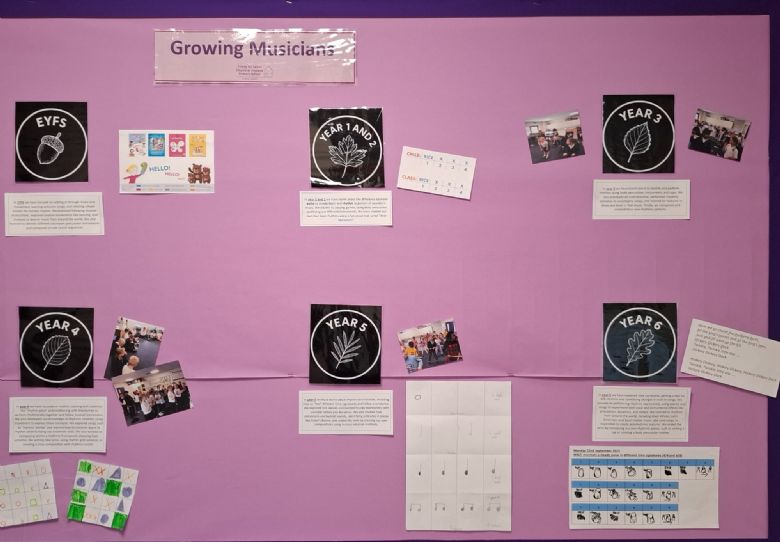
Trinity All Saints implements its music curriculum through a combination of structured in-school lessons and a range of extra-curricular opportunities. The music lead utilizes the SparkYard scheme as a foundation for planning and delivering high[1]quality, inclusive, and relatable short burst lessons. This approach ensures that children are exposed to a diverse variety of genres, from different historical periods, cultures, and traditions. Learners are educated about musical history through a timeline and introduced to a new musician or composer every half-term, enriching their understanding of the context behind the music.Practical, hands-on music-making is central to the curriculum, with children learning to play an extensive variety of instruments, including boomwhackers, ocarinas, recorders, ukuleles, and glockenspiels. This gives pupils the opportunity to perform, both individually and as part of an ensemble.
Further opportunities for musical development and performance are provided through the school's inclusive music clubs:
- A school choir and a music club are offered to all learners during and after school, allowing students to develop their skills and confidence in a supportive environment.
- The school outsources Rocksteady band lessons as a paid extracurricular option for students who wish to pursue music in a band setting. This specialized program allows students to learn instruments like electric guitar, keyboard, drums, and vocals from professionals.
The inclusive nature of the music program ensures that all learners, regardless of academic ability, ethnicity, or background, have access to high-quality music education and opportunities to participate and excel.
Impact
The music curriculum at Trinity All Saints has a demonstrable and holistic impact on pupils, extending beyond musical proficiency to foster personal development and academic growth. The inclusive, engaging, and progressive approach ensures that all children, including SEND pupils, are engaged and confident participants in music making.
The intended impact can be evidenced in the following ways:
- Musically Confident and Skilled Learners: Pupils are confident performers, composers, and listeners. They sing accurately and with expression, play a variety of instruments with increasing control, and have a secure understanding of the interrelated dimensions of music.
- Appreciation of Diverse Musical Traditions: Through exposure to a wide variety of genres and composers, children develop an appreciation and respect for music from different historical periods and cultures. This cultural literacy enriches their overall education and broadens their perspectives.
- Development of Broader Skills: The music program develops a range of transferrable skills essential for life. Regular participation in performances and ensembles cultivates self-confidence, self-discipline, and teamwork. Active engagement in music also enhances creativity, concentration, and emotional wellbeing.
- Strong Progression and Achievement: The progressive nature of the curriculum, following the SparkYard scheme, ensures that pupils build upon their prior knowledge and skills year-on-year. This allows them to achieve the expectations outlined in the National Curriculum at the end of each key stage and progress in their creative excellence.
- Inclusivity and Wellbeing: Music provides a powerful and inclusive medium for expression, particularly for SEND pupils who often find it a channel for excelling and building confidence. All learners gain a deeper understanding of the value and importance of music to their own and others’ lives and wellbeing.
- Effective Assessment and Monitoring: The impact of the curriculum is measured through a variety of methods. The music lead monitors lessons, engages in pupil dialogue, and scrutinizes outcomes to ensure that the musical provision is high-quality and enables all pupils to make progress. This data-informed approach allows the school to identify areas of need and celebrate musical achievements across the school and in the wider community.