Computing
"Computing is not about computers any more. It is about living."
Nicolas Negroponte
Intent
At Trinity we want pupils to be MASTERS of technology and not slaves to it. Technology is everywhere and will play a pivotal part in students' lives. Therefore, we want to model and educate our pupils on how to use technology positively, responsibly and safely. We want our pupils to be creators not consumers and our broad curriculum encompassing computer science, information technology and digital literacy reflects this. We want our pupils to understand that there is always a choice with using technology and as a school we utilise technology (especially social media) to model positive use. We recognise that the best prevention for a lot of issues we currently see with technology/social media is through education. Building our knowledge in this subject will allow pupils to effectively demonstrate their learning through creative use of technology We recognise that technology can allow pupils to share their learning in creative ways. We also understand the accessibility opportunities technology can provide for our pupils. Our knowledge rich curriculum has to be balanced with the opportunity for pupils to apply their knowledge creatively which will in turn help our pupils become skilful computer scientists. We encourage staff to try and embed computing across the whole curriculum to make learning creative and accessible. We want our pupils to be fluent with a range of tools to best express their understanding and hope by Upper Key Stage 2, children have the independence and confidence to choose the best tool to fulfil the task and challenge set by teachers.
Implementation
We are using a comprehensive scheme (teachcomputing.org) which aligns itself with the National Curriculum. It covers 6 key areas:-
1. Computing systems and networks - Technology around us
2. Creating media - Digital painting
3. Programming A - Moving a robot
4. Data and information - Grouping data
5. Creating media - Digital writing
6. Programming B - Programming animations
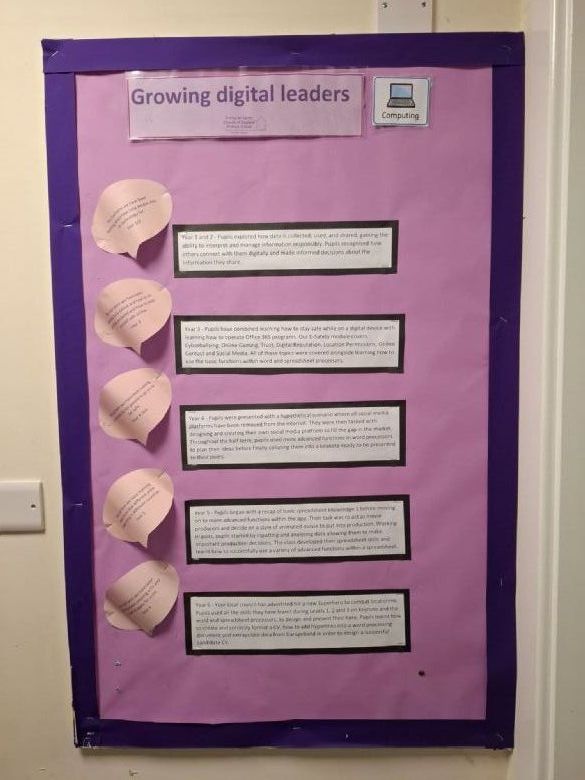
These areas are built on each year, showing progression from KS1 to KS2. EYFS are exposed to Computing through practical use of Computing equipment in the provision areas. Our implementation is achieved using a variety of resources available to us (notably laptops and iPads), which are also embedded in other curriculum areas.
Impact
We encourage our children to enjoy and value the curriculum we deliver. We will constantly ask the WHY behind their learning and not just the HOW. We want learners to discuss, reflect and appreciate the impact computing has on their learning, development and well-being. Finding the right balance with technology is key to an effective education and a healthy life-style. We feel the way we implement computing helps children realise the need for the right balance and one they can continue to build on in their next stage of education and beyond. We encourage regular discussions between staff and pupils to best embed and understand this. The way pupils showcase, share, celebrate and publish their work will best show the impact of our curriculum. We also look for evidence through reviewing pupil’s knowledge and skills digitally with work that they save online, on the school system and work in their books.